Have you ever seen someone write “APAC” in a message, work email, Discord server, LinkedIn post, or online discussion and wondered what it actually means?
You’re not alone.
Unlike internet slang such as “LOL” or “IMO,” APAC isn’t a trendy texting abbreviation.
Instead, it’s a widely used regional acronym that appears in business conversations, gaming communities, customer support, social media, and even online job listings.
Knowing what APAC means can help you avoid confusion, especially if you communicate with people or companies around the world.
In this guide, you’ll learn the APAC meaning, where it came from, how people use it in chats, real conversation examples, common misunderstandings, and similar abbreviations.
Updated for 2026, this article explains everything in simple language that’s easy to understand.
What Does APAC Mean?
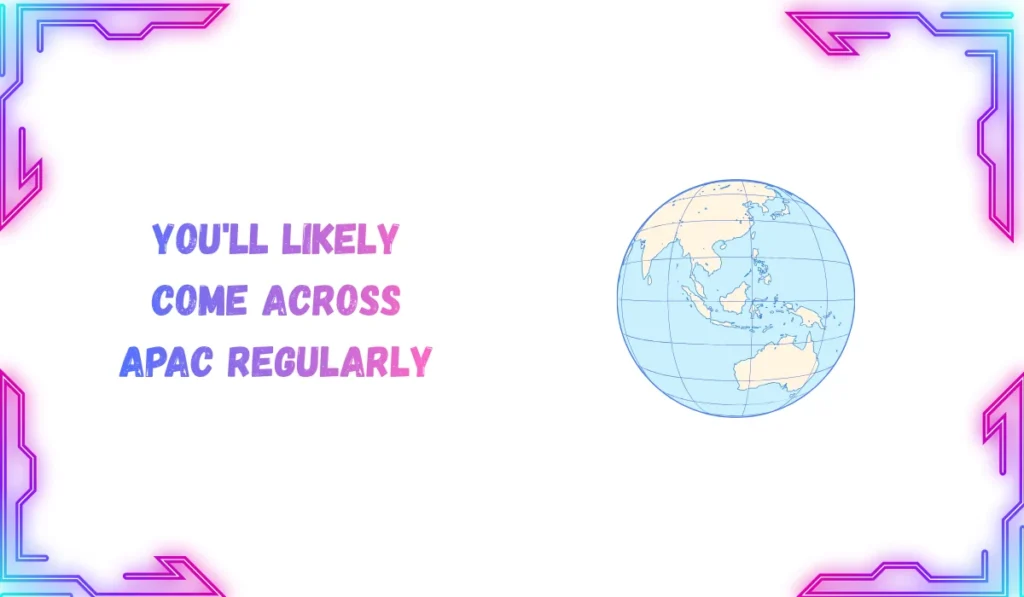
APAC stands for Asia-Pacific.
It refers to the geographic region that includes many countries in Asia and the Pacific Ocean area.
For example, APAC often includes countries such as:
- Australia
- New Zealand
- China
- Japan
- South Korea
- India
- Singapore
- Malaysia
- Indonesia
- Thailand
- Vietnam
- Philippines
The exact list depends on the company or organization using the term.
Simple Definition
APAC = Asia-Pacific Region
People use this abbreviation when talking about:
- Business operations
- Customer support
- Sales teams
- Gaming servers
- Time zones
- Marketing campaigns
- International events
Unlike many internet abbreviations, APAC is not slang. It is a professional acronym that has become common in digital communication.
The Origin of APAC
The abbreviation APAC became popular in international business during the 1980s and 1990s as companies expanded globally.
Instead of repeatedly saying Asia-Pacific region, businesses shortened it to APAC.
Today, you’ll find it almost everywhere:
- Corporate emails
- Zoom meetings
- Slack conversations
- LinkedIn posts
- Job descriptions
- Customer support tickets
- Gaming communities
- Technology forums
Because remote work has grown so much, APAC is now familiar even to people who don’t work in multinational companies.
Is APAC Internet Slang?
No.
This is one of the biggest misunderstandings.
APAC is not internet slang or texting slang.
Instead, it is a regional abbreviation used in professional and online communication.
Think of it like these abbreviations:
- USA
- UK
- EU
- UAE
- ASEAN
They describe places—not emotions or reactions.
That said, because many people work remotely and chat online every day, APAC often appears in casual messaging apps like Slack, Microsoft Teams, WhatsApp, and Discord.
APAC Meaning in Text Messages
In texting, APAC usually refers to the Asia-Pacific region.
Someone might mention APAC when discussing:
- Travel
- Time zones
- Online meetings
- Friends from another country
- International shipping
- Gaming servers
Example
Alex: Are you joining tonight’s meeting?
Chris: I can’t. It’s scheduled for APAC hours.
Here, “APAC hours” means the meeting time is convenient for people living in Asia-Pacific countries.
APAC Meaning in Business
Business is where APAC is used most frequently.
Large companies divide the world into regions for easier management.
Common regions include:
- APAC (Asia-Pacific)
- EMEA (Europe, Middle East, Africa)
- LATAM (Latin America)
- NA (North America)
For example:
“Our APAC sales team exceeded its quarterly goals.”
This simply means the sales team responsible for Asia-Pacific countries performed well.
APAC Meaning on Social Media
You may see APAC on platforms like:
- X (formerly Twitter)
- Threads
Typical posts include:
- Hiring for APAC markets
- APAC product launch
- APAC customer support
- APAC conference
- APAC community event
Example:
“Looking for creators across APAC.”
The creator is looking for influencers located in Asia-Pacific countries.
APAC Meaning in Gaming
Many online games separate players by region.
You’ll often see servers like:
- NA
- EU
- APAC
An APAC server usually includes players from:
- Australia
- Singapore
- Japan
- Korea
- Southeast Asia
- Other nearby countries
Example:
Player 1: Which server are you on?
Player 2: APAC.
That simply tells you their game server location.
APAC Meaning in Customer Support
Many global companies organize customer support teams by region.
For example:
- APAC Support
- APAC Operations
- APAC Customer Success
If you submit a support request while living in Singapore, Australia, or Japan, your ticket may be handled by the APAC team.
How to Use APAC Correctly in Texts or Chat
Using APAC is easy once you know what it represents.
Here are some common situations.
Talking About Time Zones
“I’ll join after the APAC meeting.”
Discussing Business
“Our APAC office is hiring.”
Referring to Customers
“We’re launching the update for APAC users first.”
Gaming
“I’m switching to APAC servers.”
Travel
“I’m visiting several APAC countries this year.”
The abbreviation fits naturally into conversations where the Asia-Pacific region is relevant.
Real Examples of APAC in Conversations
Workplace Chat
Manager:
Can someone help the APAC team?
Employee:
Sure, I’ll contact them after lunch.
Slack Conversation
Sarah:
The APAC launch starts tomorrow.
Mike:
Great! Everything is ready.
Gaming Chat
Player A:
Which server has lower ping?
Player B:
APAC works best for me.
Travel Planning
Emma:
Where are you flying next?
Ryan:
I’m exploring APAC this summer.
Customer Support
Customer:
Which support team handles Australia?
Agent:
Our APAC support team does.
Funny but Relatable Example
Imagine someone says:
“Our meeting starts at 3 AM because we’re matching APAC time.”
Everyone outside Asia-Pacific:
“Guess I’ll need coffee… lots of coffee.” ☕
If you’ve ever attended a global meeting, you’ve probably experienced the struggle of different time zones!
Where You’ll Commonly See APAC
You’ll find APAC in many places, including:
- Business emails
- Slack
- Microsoft Teams
- Zoom chats
- Online forums
- Reddit discussions
- Gaming servers
- Job listings
- Tech companies
- Customer support portals
- Marketing reports
- Product launches
The more international your online activities become, the more often you’ll encounter this abbreviation.
Common Mistakes About APAC
Many beginners misunderstand APAC.
Here are the most common mistakes.
Mistake 1: Thinking It’s Text Slang
It isn’t.
APAC refers to a geographic region.
Mistake 2: Assuming It Means One Country
No.
It represents many countries across Asia and the Pacific.
Mistake 3: Every Company Uses the Same Country List
Not always.
Some businesses include certain Pacific countries while others don’t.
Mistake 4: Pronouncing It Incorrectly
Most people simply say:
“A-PAC”
Letter by letter.
Similar Regional Abbreviations
You’ll often see APAC alongside these abbreviations.
| Abbreviation | Meaning |
|---|---|
| EMEA | Europe, Middle East and Africa |
| LATAM | Latin America |
| NA | North America |
| EU | European Union or Europe (depending on context) |
| SEA | Southeast Asia |
| ANZ | Australia and New Zealand |
| ASEAN | Association of Southeast Asian Nations |
Learning these makes international conversations much easier.
When Should You Use APAC?
Use APAC when discussing:
- Global business
- International teams
- Marketing regions
- Gaming servers
- Customer support
- Travel plans
- Shipping
- Online communities
Avoid using APAC when talking about a single country unless the broader region is actually relevant.
Why APAC Matters in Today’s Digital World
Remote work, online gaming, and international businesses have made APAC more common than ever.
Whether you’re:
- Applying for remote jobs
- Reading LinkedIn posts
- Joining Discord communities
- Watching esports
- Working with global clients
You’ll likely come across APAC regularly.
Understanding it helps you communicate more confidently.
Related Slang and Abbreviations
If you’re learning internet abbreviations, these are worth exploring next:
- IMO — In My Opinion
- TBH — To Be Honest
- SMH — Shaking My Head
- WTW — What’s the Word?
- WYO — What You On?
- ISTG — I Swear to God
- EMEA — Europe, Middle East, and Africa
- LATAM — Latin America
- NA — North America
Internal Linking Suggestions
You could also read:
- IMO Meaning in Text
- TBH Meaning
- SMH Meaning
- WTW Meaning
- WYO Meaning
- EMEA Meaning
- LATAM Meaning
- NA Meaning
These articles pair well with APAC and help build a complete understanding of common abbreviations used online.
Frequently Asked Questions (FAQs)
Is APAC internet slang?
No. APAC is a regional abbreviation that stands for Asia-Pacific. It is commonly used in business, gaming, customer support, and international communication.
What does APAC mean in texting?
In texts or chats, APAC usually refers to the Asia-Pacific region, especially when discussing meetings, travel, gaming servers, or work.
What countries are in APAC?
Common APAC countries include Australia, New Zealand, China, Japan, India, Singapore, Malaysia, Indonesia, Thailand, Vietnam, the Philippines, and South Korea. The exact list varies by organization.
Is APAC used in gaming?
Yes. Many multiplayer games use APAC to identify servers for players in Asia-Pacific countries.
Is APAC only used by businesses?
No. While businesses use it most often, you’ll also see APAC in social media posts, online communities, esports, travel discussions, and technology forums.
What is the difference between APAC and EMEA?
APAC refers to the Asia-Pacific region, while EMEA stands for Europe, the Middle East, and Africa.
How do you pronounce APAC?
Most people pronounce it as “A-PAC”, saying each letter individually.
Should I use APAC in casual conversations?
Yes, but only when talking about the Asia-Pacific region. It’s appropriate in both professional and casual conversations when the geographic context is relevant.
Conclusion
APAC simply means Asia-Pacific, a region that includes many countries across Asia and the Pacific. Although it often appears in online chats, it isn’t internet slang.
As remote work and international communities continue to grow, you’ll likely encounter APAC more often in emails, Slack messages, LinkedIn posts, gaming servers, and social media conversations.
Understanding its meaning makes it easier to follow discussions and communicate confidently in a global environment.
Updated for 2026, this guide provides everything you need to know about using the term correctly.