If you’ve recently started driving or you’re preparing for your driving test, you’ve probably seen a Yield sign and wondered what it really means.
Unlike stop signs, yield signs can confuse new drivers because they don’t always require you to stop. Knowing the correct yield meaning driving can help you avoid accidents, drive more confidently, and follow traffic laws correctly.
Although people often search for “yield meaning” because they see the word in different situations including texting, business, and everyday English this article focuses specifically on yield meaning in driving.
You’ll learn what the sign means, when to stop, when you can continue driving, common mistakes to avoid, and practical examples from real-life traffic situations.
Updated for 2026, this guide uses simple language, real-world examples, and beginner-friendly explanations so anyone can understand the concept quickly.
What Does Yield Meaning Driving Mean? (Definition & Origin)
The yield meaning driving is simple:
A yield sign tells drivers to give the right-of-way to other vehicles, cyclists, or pedestrians before continuing.
Unlike a stop sign, you do not have to stop every time. Instead, you should:
- Slow down as you approach.
- Check for traffic.
- Let others pass if necessary.
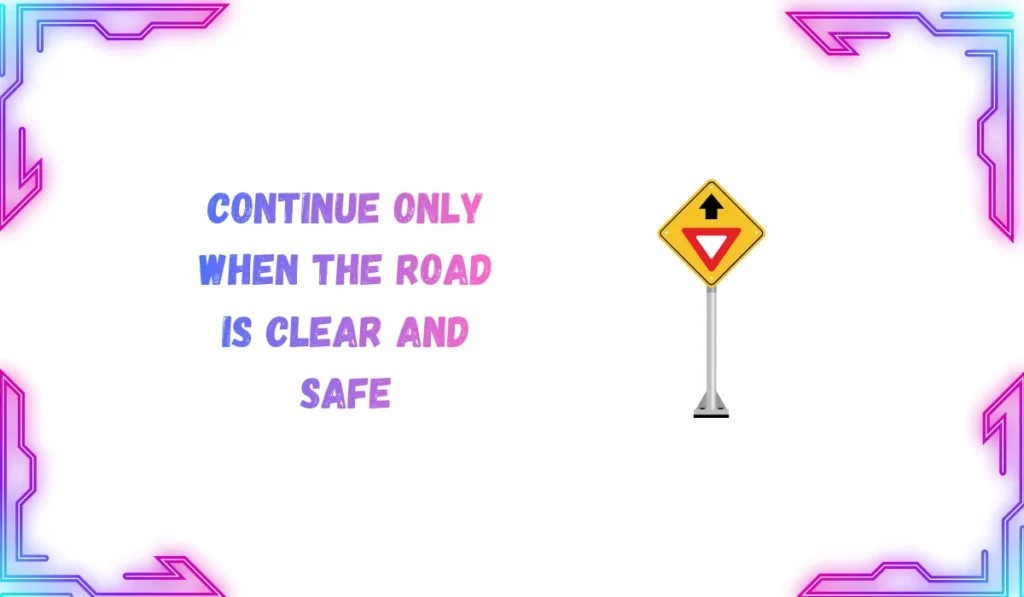
- Continue only when the road is clear and safe.
Think of it this way:
Yield means “go if it’s safe, but let others go first.”
The word yield comes from an old English word meaning to give way or surrender. In driving, it means giving another road user priority before you continue.
Why Is Understanding Yield Important?
Many new drivers confuse yield with stop, but they are not the same.
Understanding yield signs helps you:
- Drive safely.
- Prevent crashes.
- Pass your driving test.
- Follow traffic rules correctly.
- Reduce confusion at intersections and roundabouts.
A simple misunderstanding can lead to dangerous situations, especially during heavy traffic.
What Does a Yield Sign Look Like?
A yield sign is easy to recognize.
It is:
- An upside-down triangle.
- White in the center.
- Surrounded by a thick red border.
- Usually says YIELD in large red letters.
Drivers can recognize it from any direction because its unique shape stands out from other road signs.
When Should You Yield?
You’ll commonly see yield signs in several places.
At Intersections
When entering a road with a yield sign, allow vehicles already on the main road to continue before entering.
Example:
You approach a side street with a yield sign. A car is coming from your left.
✅ Wait until it passes.
At Roundabouts
Most roundabouts have yield signs before entering.
Drivers already inside the roundabout have the right-of-way.
Only enter when there is a safe gap.
Highway Entrance Ramps
When merging onto a highway, vehicles already traveling on the highway usually have priority.
You should adjust your speed and merge safely without forcing other drivers to brake.
Crosswalks
Pedestrians often have the right-of-way.
If someone is crossing the road, you must yield.
Bicycle Lanes
Cyclists may also have priority in certain situations.
Always check before turning across a bike lane.
How to Use Yield Correctly While Driving
Following a yield sign isn’t difficult once you know the process.
Here’s a simple step-by-step guide.
Step 1: Slow Down
Never speed through a yield sign.
Reduce your speed early.
Step 2: Look Around
Check:
- Left
- Right
- Ahead
- Mirrors
- Blind spots
Step 3: Decide Who Has the Right-of-Way
If another vehicle or pedestrian could be affected by your movement, let them go first.
Step 4: Continue Carefully
If no one is coming, you may continue without stopping completely.
Always stay alert.
Examples of Yield Meaning Driving in Real-Life Situations
Let’s make the idea easier with practical examples.
Example 1
Driver A reaches a yield sign.
Driver B is already driving on the main road.
Driver A waits.
Correct decision.
Example 2
No cars are approaching.
Driver slows down, checks carefully, then continues.
Correct decision.
Example 3
A pedestrian starts crossing.
Driver stops and lets the pedestrian finish crossing.
Correct decision.
Example 4
A driver ignores the yield sign and pulls out suddenly.
Another driver brakes hard.
Incorrect and dangerous.
Yield vs Stop: What’s the Difference?
Many people mix these two signs up.
| Yield | Stop |
|---|---|
| Slow down first | Must stop completely |
| Continue if clear | Stop every time |
| Give others the right-of-way | Wait until it’s your turn |
| May not require stopping | Always requires stopping |
The easiest way to remember it:
Yield = Slow, Check, Go if Safe
Stop = Stop Completely, Then Go
Common Mistakes Drivers Make at Yield Signs
Even experienced drivers sometimes make mistakes.
Here are the most common ones.
Driving Too Fast
Some drivers treat yield signs like they don’t exist.
Always slow down first.
Stopping When It’s Not Necessary
Being overly cautious isn’t always helpful.
If the road is completely clear, you may continue safely.
Forgetting Pedestrians
People often watch only for cars.
Remember to check for:
- Pedestrians
- Cyclists
- Motorcycles
Assuming Others Will Stop
Never assume another driver will let you go.
Wait until you’re sure it’s safe.
Looking Only One Direction
Traffic can come from multiple directions.
Check carefully before entering.
How People Explain Yield in Everyday Language
Driving instructors often explain yield using simple phrases like:
- “Give way.”
- “Let others go first.”
- “Wait your turn.”
- “Proceed if safe.”
These are all easy ways to remember the rule.
Is Yield Used in Texts or Chat?
Unlike abbreviations such as LOL, IMO, or WYD, the word yield is not a common texting abbreviation.
However, people sometimes use it jokingly in online conversations.
Examples:
Friend 1: I finally admitted you were right.
Friend 2: You yielded at last!
Friend 1: The kids wanted pizza.
Friend 2: I had to yield.
Here, yield simply means:
- Give in
- Agree
- Let someone else win
This meaning comes from standard English rather than internet slang.
Examples of Yield in Conversations
Driving Example
Driver: Should I stop here?
Instructor: It’s a yield sign. Slow down and let that car pass first.
Family Example
Dad: You don’t have to stop unless traffic is coming.
Friends
Alex: I finally yielded and watched your favorite movie.
Sam: See? It was worth it!
Social Media
“Sometimes you have to yield instead of arguing online.”
Driving Lesson
Student: Do I always stop at yield signs?
Instructor: No, only when another road user has priority.
Common Misunderstandings About Yield Meaning Driving
Many myths still confuse beginner drivers.
Myth 1: Yield Always Means Stop
False.
You stop only when necessary.
Myth 2: Yield Signs Are Optional
False.
Ignoring them can cause accidents and traffic violations.
Myth 3: Bigger Vehicles Always Have Priority
False.
The right-of-way depends on traffic rules, not vehicle size.
Myth 4: If You Slow Down, You Don’t Need to Look
False.
Always check carefully before moving.
Related Driving Terms You Should Know
Learning these terms makes driving easier.
- Right-of-way – Who goes first.
- Merge – Join another lane safely.
- Intersection – Where roads meet.
- Roundabout – Circular traffic junction.
- Crosswalk – Area for pedestrians.
- Lane – A marked section of the road.
- Traffic sign – Road instruction for drivers.
- Stop sign – Requires a complete stop.
If your website covers driving education, you could also publish articles about:
- Stop sign meaning
- Right-of-way rules
- Merge lane meaning
- Roundabout rules
- Defensive driving tips
Tips for Remembering Yield Meaning Driving
Use these simple tricks.
- Think “Give way.”
- Slow first, then decide.
- Never rush through a yield sign.
- Watch for pedestrians.
- Look in every direction.
- When unsure, wait.
A few extra seconds can prevent an accident.
Why Yield Signs Improve Road Safety
Yield signs keep traffic flowing smoothly without requiring every vehicle to stop.
They help:
- Reduce traffic congestion.
- Improve traffic flow.
- Prevent unnecessary stopping.
- Keep intersections safer.
- Protect pedestrians and cyclists.
They’re designed to balance efficiency and safety.
Related Slangs or Abbreviations
While yield itself is not internet slang, readers interested in online language may also enjoy learning these popular abbreviations:
- LOL – Laugh Out Loud
- IMO – In My Opinion
- TBH – To Be Honest
- BRB – Be Right Back
- WYD – What Are You Doing?
- IDK – I Don’t Know
- SMH – Shaking My Head
- FR – For Real
These abbreviations are commonly used across texting, social media, gaming, and online chats.
FAQs
What does yield mean while driving?
It means you must give the right-of-way to other vehicles, cyclists, or pedestrians before continuing safely.
Do you always stop at a yield sign?
No. You only stop if traffic, cyclists, or pedestrians require you to give way.
What is the difference between yield and stop?
A stop sign always requires a complete stop. A yield sign requires slowing down and stopping only if necessary.
Who has the right-of-way at a yield sign?
Vehicles, cyclists, or pedestrians already moving on the main road generally have the right-of-way.
Can you get a ticket for ignoring a yield sign?
Yes. Failing to yield can lead to traffic violations, fines, or even accidents depending on local traffic laws.
Is yield the same as giving way?
Yes. In many countries, yield and give way have the same meaning.
Is yield a texting abbreviation?
No. Yield is a regular English word, not an internet slang abbreviation, although people sometimes use it figuratively in online conversations.
Where are yield signs usually found?
They’re commonly placed at intersections, highway entrance ramps, roundabouts, pedestrian crossings, and merge points.
Conclusion
Understanding the yield meaning driving is one of the most important lessons for safe driving.
A yield sign tells you to slow down, check your surroundings, and give the right-of-way when necessary.
Unlike a stop sign, you don’t always have to come to a complete stop, but you must always be ready to do so if traffic conditions require it.
Updated for 2026, these rules remain essential for new and experienced drivers alike.
By practicing good observation, staying patient, and respecting the right-of-way, you’ll become a safer and more confident driver.